
Share this product :
PP Homopolymer H1500 (Injection) - South Korea
- Origin
- : Korea (South)
- CAS Number
- : 9003-07-0
- HS Code
- : 390210
Basic Info
- Physical Form
- : Solid
- Concentration
- : Pure substance
- Appearance / Color
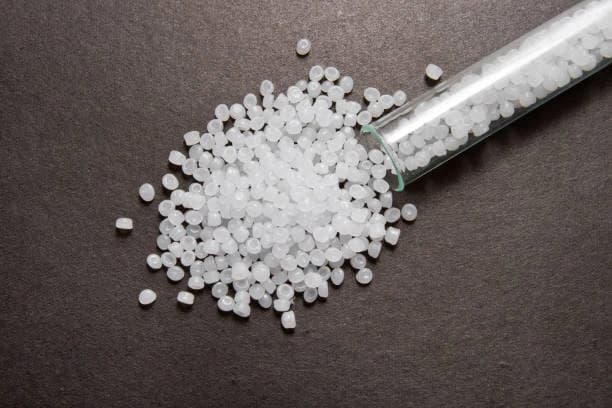
- : White to off-white solid
- Drug Precursor Status
- : Non-precursor
Categories
Share this product :
Brief Overview
The thermoplastic polymer polypropylene homopolymer is a kind of polypropylene made entirely of the monomer propylene. Its uniformly ordered and aligned molecular chains are characterized by a high degree of crystallinity and isotactic structure. Good stiffness, chemical resistance, and electrical insulation qualities are the end products of this process. Polypropylene homopolymer, which has a high melting point, is handled by injection molding or extrusion to produce pipes, sheets, and packaging materials. Because of its excellent mechanical and thermal properties, it is widely used in industries like consumer goods, construction, and automotive.
Manufacturing Process
Propylene monomers are polymerized during the production of polypropylene homopolymer. This is a condensed description of the procedure:
Polymerization: In the presence of a Ziegler-Natta catalyst, the monomer propylene is polymerized. An organoaluminum co-catalyst and a transition metal compound make up the Ziegler-Natta catalyst in most cases.Chains of homopolymer polypropylene with a high molecular weight are created when the catalyst starts the reaction.
Process Conditions: By modifying the temperature and pressure during the process, the final polypropylene homopolymer's properties can be customized. These modifications affect the polymer's properties and molecular structure.
Additives: To improve the performance and stability of the polymer, a variety of additives, including stabilizers, processing aids, and antioxidants, can be added.
Processing Methods: Injection molding and extrusion are two common methods used to process the polypropylene homopolymer. The polymer is shaped by these processes into finished goods like pipes, sheets, and packaging.
By carefully regulating the polymerization process, modifying conditions, and adding additives, manufacturers are able to produce polypropylene homopolymer with specific properties suitable for a variety of applications in industries like consumer goods, construction, and automotive.